
Almost every article about language learning assumes one language at a time. Pick a target, immerse, repeat.
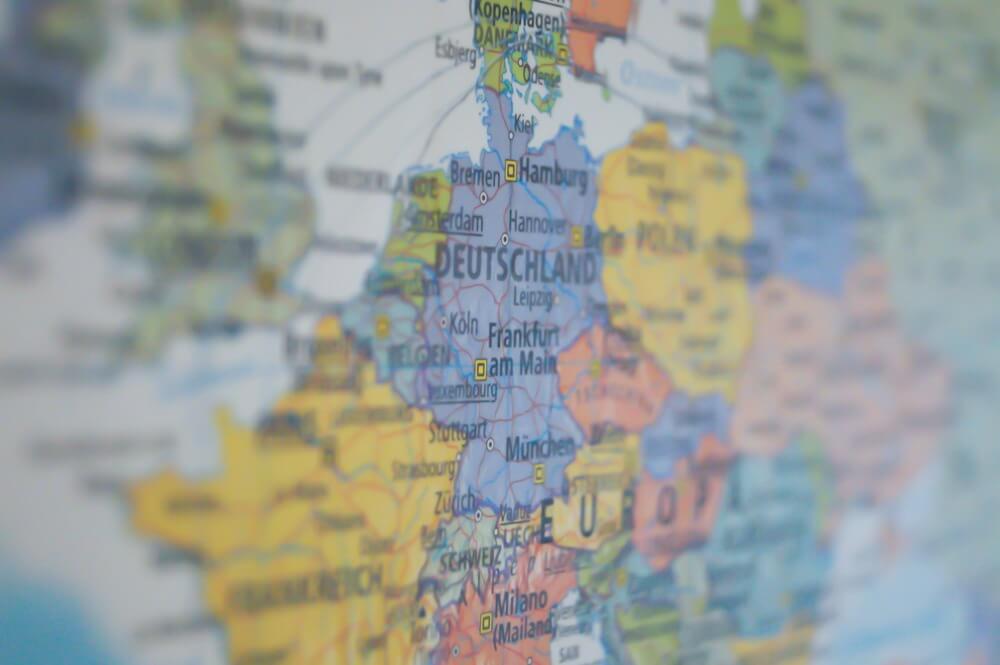
A multi-country trip across Central Europe does the opposite. Somebody travelling from Germany down through Austria, Slovakia, Hungary and into the Czech Republic passes through four languages in about a week, three of which are unrelated to each other in any useful way.
That is not immersion. It is something else entirely, and the strategy that works for it looks nothing like the advice in a language course.
Why Depth Is the Wrong Goal at This Pace
The instinct is to learn a little of each. Fifty words, some basic phrases, a few verbs.
That instinct is wrong, for a reason worth understanding.
Vocabulary without grammar is nearly unusable in these particular languages. Hungarian and the Slavic languages both rely heavily on case endings, which means the dictionary form of a noun is frequently not the form you need. Knowing the word for station does not tell you how to say to the station.
Learning fifty words in a language with fifteen or more grammatical cases produces the ability to recognise a word on a sign and very little else.
Recognition, however, is genuinely valuable. Reading a platform announcement, a menu heading or a street sign is achievable in a few hours of study and pays off constantly.
So the realistic goal splits in two. Productive skill in a handful of fixed phrases. Receptive skill in signage and numbers. Nothing in between.
Where River Cruise Land Packages Change the Calculation
There is one structural factor that changes how much any of this matters, and it is worth naming because it determines where practice is actually possible.
Celebrity's river cruise offers extension stays in Budapest and Prague, and with river cruise land packages of that kind a traveller gets two or three grounded days in one city rather than a few hours passing through, which is the difference between using a language and merely recognising it.
The distinction matters for a learner. Half a day in a port is enough for a greeting and a transaction. Three days in one city is enough to be understood, corrected, and understood again, which is the loop that actually produces learning.
Anyone serious about practising on a multi-country trip should concentrate the effort where the nights are, not spread it evenly across every place the route touches.
The Four Languages, Honestly Assessed
They are not equally difficult and they are not equally useful.
German is the most useful of the four by reach. It is spoken across Germany and Austria, and understood in parts of Czechia and Hungary. European Commission survey data reported by Cedefop has found German among the most widely spoken foreign languages in the EU, slightly ahead of French at the time of that survey.
It is also the one most likely to be met with a reply in German rather than English, which makes it the best candidate for genuine practice.
Czech and Slovak are West Slavic and closely related, to the point of substantial mutual intelligibility. Learn a greeting in one and you are broadly understood in the other. That is a rare efficiency on this route, and it effectively turns two languages into one and a half.
Pronunciation is the obstacle rather than vocabulary. Consonant clusters and the Czech ř defeat most beginners, and that is fine.
Hungarian is the outlier, and the reason this trip is genuinely unusual. Britannica describes Hungarian as a member of the Finno-Ugric group of the Uralic family, with its closest relatives being Mansi and Khanty, spoken in western Siberia.
It is not related to German, Czech or Slovak in any way a learner can exploit. No cognates, no shared grammar, no transferable intuitions.
Britannica also notes that Hungarian and the Ob-Ugric languages form the geographically most distant members of the family, which explains why it sits surrounded by Indo-European languages and resembles none of them.
Expectations should be set accordingly. Greeting, thank you, please, numbers to ten. That is a reasonable ambition for a few days.
Why the Greeting and the Thank You Do the Heavy Lifting
This is the counterintuitive part, and it holds across all four.
A correctly pronounced greeting and thank you in the local language changes the character of an interaction more than a hundred words of vocabulary would.
The reason is social rather than linguistic. It signals effort, and effort is received as respect. In countries where visitors routinely default to English without trying, a two-word attempt registers.
It also avoids the most common failure mode. A traveller who opens with a long, uncertain sentence gets a rapid reply they cannot follow, and the conversation collapses. A traveller who opens with a clean greeting and then switches to English keeps everyone comfortable.
So the priority list, in order:
- Hello, in the right register for the time of day
- Thank you
- Please
- Excuse me
- Numbers one to ten
- Yes and no
- The word for the thing you will ask for most
Pronunciation matters far more than quantity here. Four phrases said clearly beat twenty said unrecognisably.
Where the Loanwords Help
There is more shared material across these languages than their family trees suggest, and it is worth knowing where to look.
Britannica notes that Hungarian, surrounded by non-Uralic languages, has borrowed extensively from Iranian, Turkic, Caucasian, Slavic, Latin and German sources.
German loanwords in particular turn up across the whole region, a legacy of Habsburg administration and trade. Words around food, crafts, administration and transport are frequently recognisable to anyone with basic German.
International vocabulary helps too. Hotel, taxi, restaurant, station, police, information and passport are broadly transparent across all four, with local spelling adjustments.
And numbers on written signs are simply numerals. Prices, platforms, times and room numbers require no language at all.
The Realistic Plan
Learn German properly if you are learning anything, because it has the widest reach on this route.
Learn one set of courtesy phrases for Czech, and use it in Slovakia too.
Learn four words of Hungarian and accept that as a success rather than a shortfall.
Concentrate practice in whichever city you sleep in for several nights, not in the places you pass through for an afternoon.
And judge the trip by whether people understood your greeting, not by how much vocabulary you retained. At this pace, that is the honest measure of success.